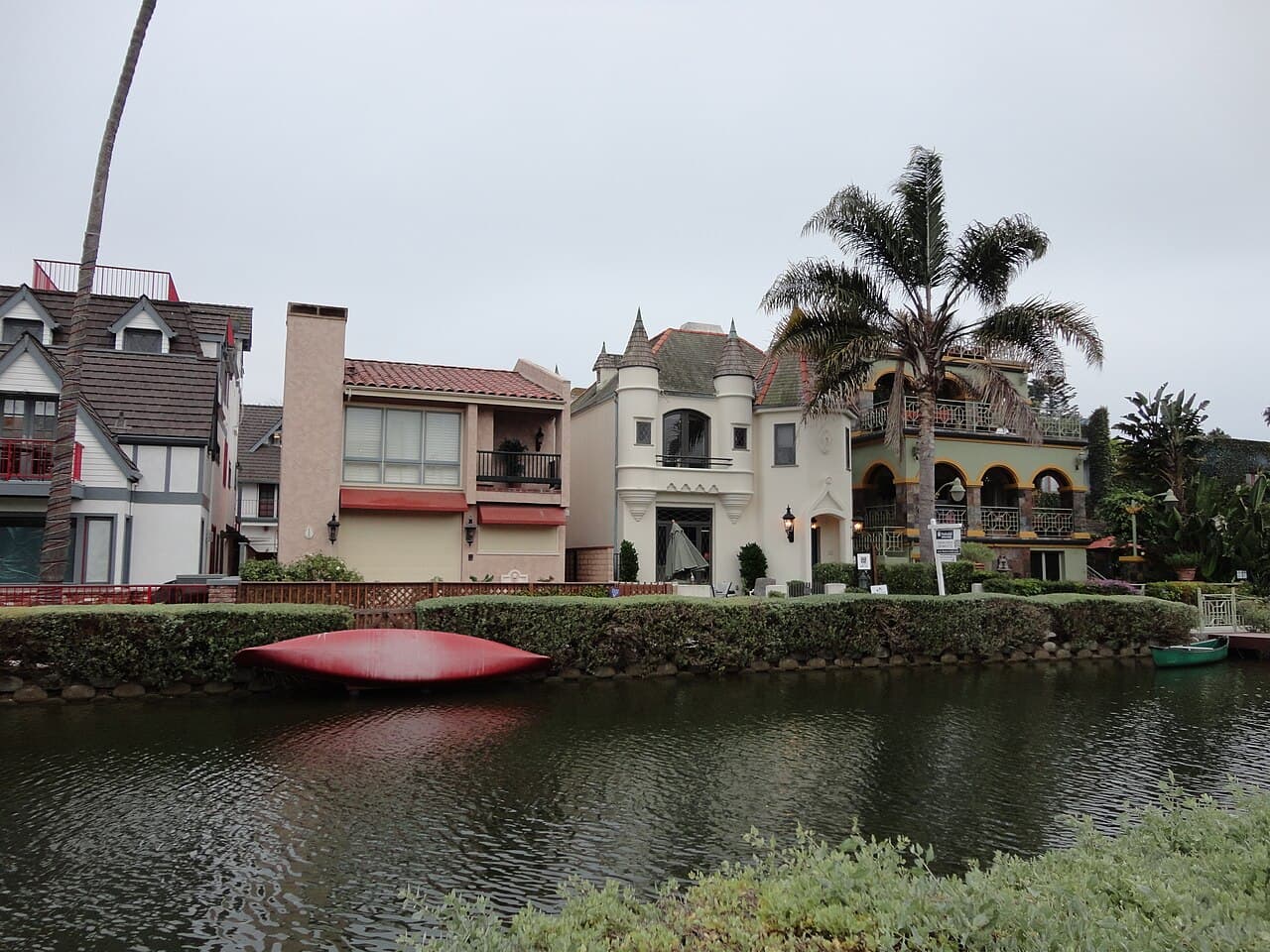
Introduction to the Venice Canals
The Venice Canal Historic District in California is a man-made canal system built in 1905 by Abbot Kinney, a wealthy businessman who sought to recreate the charm of Venice, Italy, in the United States. The district features six canals, including the Grand Canal, Carroll Canal, and Linnie Canal, which are lined with beautiful bungalows, gardens, and walking paths. In contrast, the canals of Venice, Italy, are a natural part of the city's landscape, with a history dating back to the 5th century.
Historical and Structural Differences
One of the most notable differences between the two Venice Canals is their scale. The canals of Venice, Italy, stretch for over 150 kilometers, while the California canals cover a mere 1.5 kilometers. Additionally, the Italian canals are much deeper and wider, with some reaching depths of up to 5 meters. The California canals, on the other hand, are relatively shallow, with an average depth of 1.5 meters. In terms of function, the Italian canals have historically served as a primary mode of transportation, while the California canals are primarily used for recreational purposes.
Gondola History and Urban Planning
Gondolas have been an integral part of Venetian culture for centuries, with the first recorded use of gondolas dating back to the 11th century. In California, gondolas were introduced in the early 20th century as a novelty, and today, they are a popular tourist attraction. In terms of urban planning, the Italian canals are densely populated, with buildings and bridges constructed directly over the water. In contrast, the California canals are lined with single-family homes and gardens, creating a more suburban atmosphere.
Image: Downtowngal via Wikimedia Commons, CC BY-SA 4.0